
2017 Headlines
Headlines for 2017 Arctic Report Card.

Arctic surface air temperature is an indicator of regional and global climate change. Although there are year-to-year and regional differences in air temperatures due to natural variability, the magnitude and Arctic-wide character of the long-term temperature increase is a major indicator of global warming and the influence of increases in greenhouse gases
Surface Air Temperature Read More »
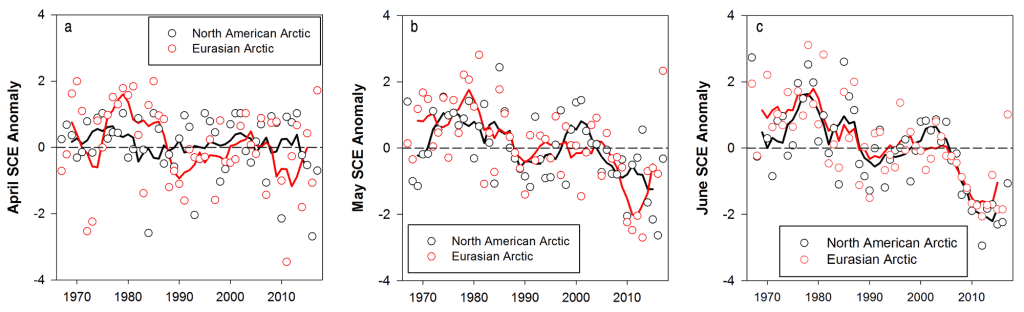
Satellite-derived estimates of SCE over Arctic land areas date back to 1967, and have shown dramatic reductions since 2005. This loss of spring snow over Arctic land areas is important because it influences the surface energy budget (snow is highly reflective of incoming solar energy), ground thermal regime (snow is a highly effective insulator of the underlying soil), and hydrological processes (the snowpack stores water in solid form for many months before spring melt).
Terrestrial Snow Cover Read More »

Reflecting surface air temperature patterns over the Greenland ice sheet, the April 2016-April 2017 season was characterized by relatively low summer (June, July, August) melt extent and ablation along the margins of the ice sheet. Correspondingly, the surface albedo, averaged over the entire ice sheet, was relatively high. The net ice mass loss over the year was near average.
Greenland Ice Sheet Read More »
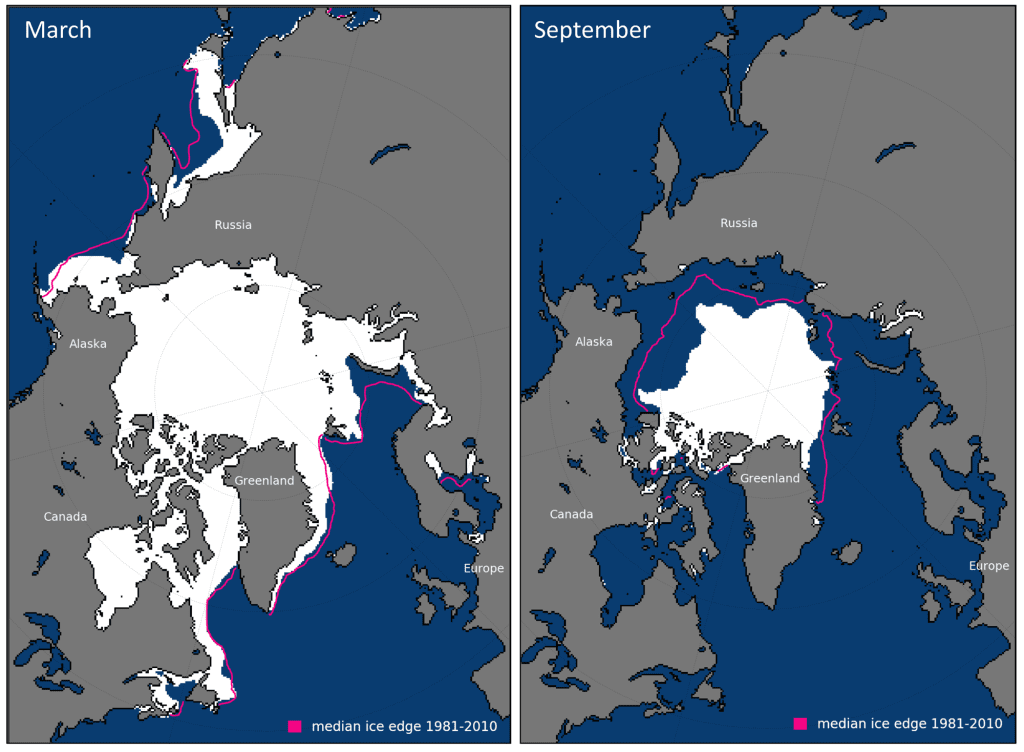
The Arctic sea ice cover varies substantially over the year, with end-of-winter ice cover generally two to three times as large as at the end of summer. Sea ice is an important element of the climate system: (1) acting as a barrier between the underlying ocean and the atmosphere, (2) limiting the amount of absorbed solar energy due to its high albedo, (3) providing a habitat for biological activity, and (4) limiting human access to the Arctic Ocean.

Summer sea surface temperatures (SST) in the Arctic Ocean are set mainly by absorption of solar radiation into the surface layer. In the Barents and Chukchi Seas, there is an additional contribution from advection of warm water from the North Atlantic and Pacific Oceans, respectively. Solar warming of the ocean surface layer is influenced by the distribution of sea ice (with more solar warming in ice-free regions), cloud cover, water color, and upper-ocean stratification. River influxes influence the latter two, as well as provide an additional source of warm water. SSTs are an essential indicator of the role of the ice-albedo feedback mechanism in any given melt season: as the area of ice cover decreases, more incoming solar radiation is absorbed by the ocean and the warmer ocean in turn melts more sea ice.
Sea Surface Temperature Read More »
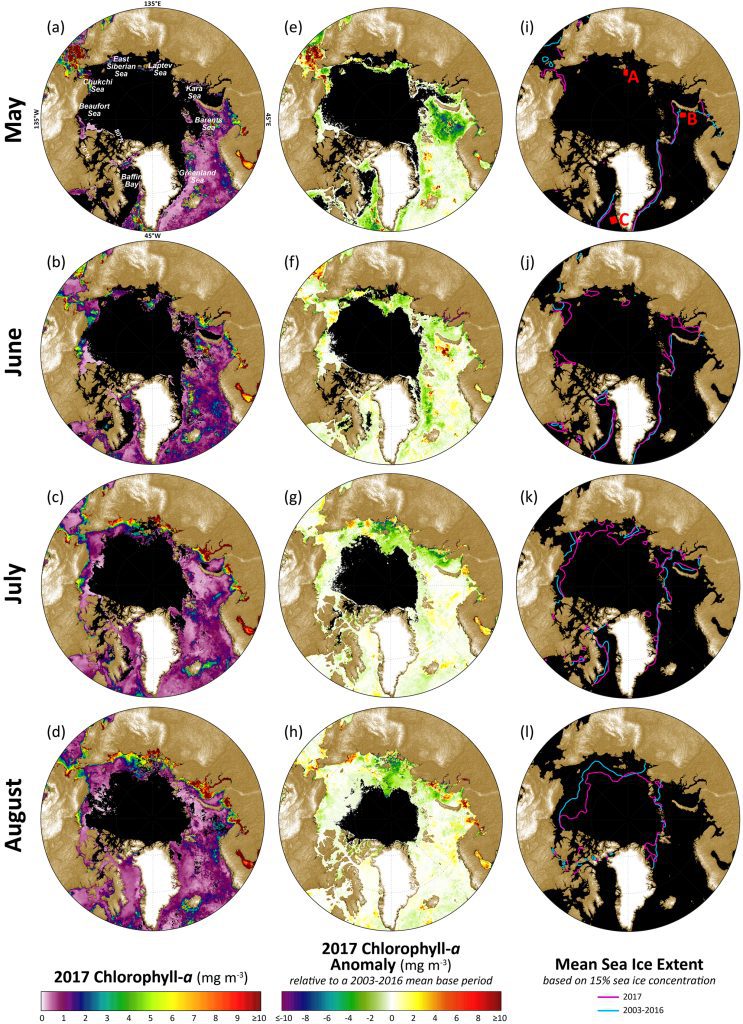
Autotrophic minute algae living in the sea ice (ice algae) and water column (phytoplankton) are the main primary producers in the Arctic Ocean. Through photosynthesis, they transform dissolved inorganic carbon dioxide into organic material. Consequently, primary production provides a key ecosystem service by providing energy to the entire food web in the oceans.
Arctic Ocean Primary Productivity Read More »

Permafrost is an important component of the Arctic landscape, influencing hydrological systems and ecosystems and also presenting challenges to infrastructure development. Permafrost temperature and active layer thickness are key indicators of changes in permafrost conditions.
Terrestrial Permafrost Read More »
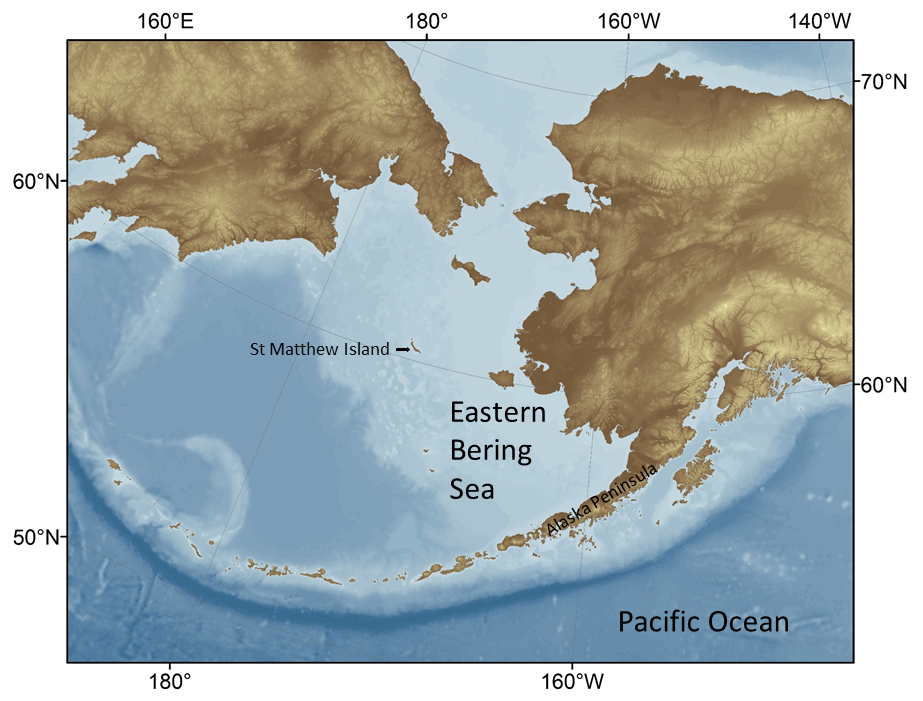
The Eastern Bering Sea (EBS) is a highly productive ecosystem characterized by a broad continental shelf and narrow slope to a deep-sea basin. Commercial fisheries in the EBS represent over 40% of fish landed annually in US waters, and the system has long supported one of the largest fisheries in the world: walleye pollock (Gadus chalcogrammus).
Groundfish Fisheries in the Eastern Bering Sea Read More »

Despite the low annual temperatures and short growing seasons characteristic of northern ecosystems, wildland fire affects both Boreal forest and adjacent tundra regions. In fact, fire is the dominant ecological disturbance in boreal forest, the world’s largest terrestrial biome.
Wildland Fire in High Latitudes Read More »