
Arctic Report Card 2008
Arctic Report Card 2008 Read More »

Vegetation in the Arctic tundra has been responding dynamically over the course of the last several decades to environmental changes, many of which are anthropogenically-induced. These vegetation changes throughout the circumpolar Arctic are not spatially homogeneous, nor are they temporally consistent (e.g. Bhatt et al. 2013), suggesting that there are complex interactions among atmosphere, ground (soils and permafrost), vegetation, and herbivore components of the Arctic system. Changes in Arctic tundra vegetation may have a relatively small impact on the global carbon budget through photosynthetic uptake of CO2, compared to changes in other carbon cycling processes (Abbott et al. 2016). However, tundra vegetation can have important effects on permafrost, hydrological dynamics, soil carbon fluxes, and the surface energy balance (e.g. Blok et el. 2010, Myers-Smith and Hik 2013, Parker et al. 2015). Tundra vegetation dynamics also control the diversity of herbivores (birds and mammals) in the Arctic, with species richness being positively related to vegetation productivity (Barrio et al. 2016). To improve our understanding of these complex interactions and their impacts on the Arctic and global systems, we continue to evaluate the state of the circumpolar Arctic vegetation.
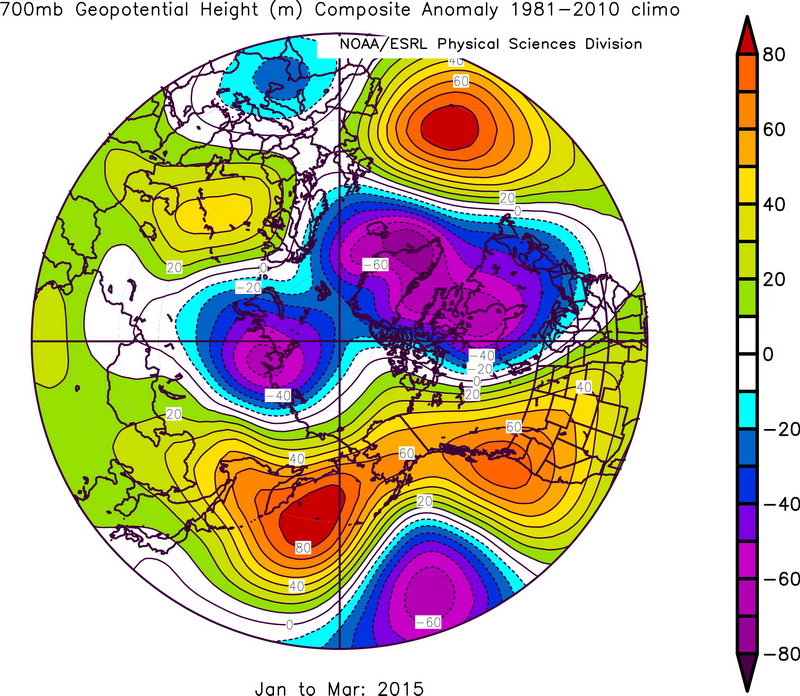
Arctic air temperatures are both an indicator and a driver of regional and global changes. Although there are year-to-year and regional differences in air temperatures due to natural random variability, the magnitude and Arctic-wide character of the long-term temperature increase is a major indicator of global warming (Overland 2009). Here we report on the spatial and temporal variability of Arctic air temperatures during the period October 2014 through September 2015, the 12-month period since the end of the previous reporting period (Overland et al. 2014).
Surface Air Temperature Read More »

The biological impacts of climate change include shifts in population range and distributions, typically poleward (Doney et al. 2012, IPCC 2014). The pace of shifting populations reflects local climate velocities (Pinsky et al. 2013). In the Arctic…
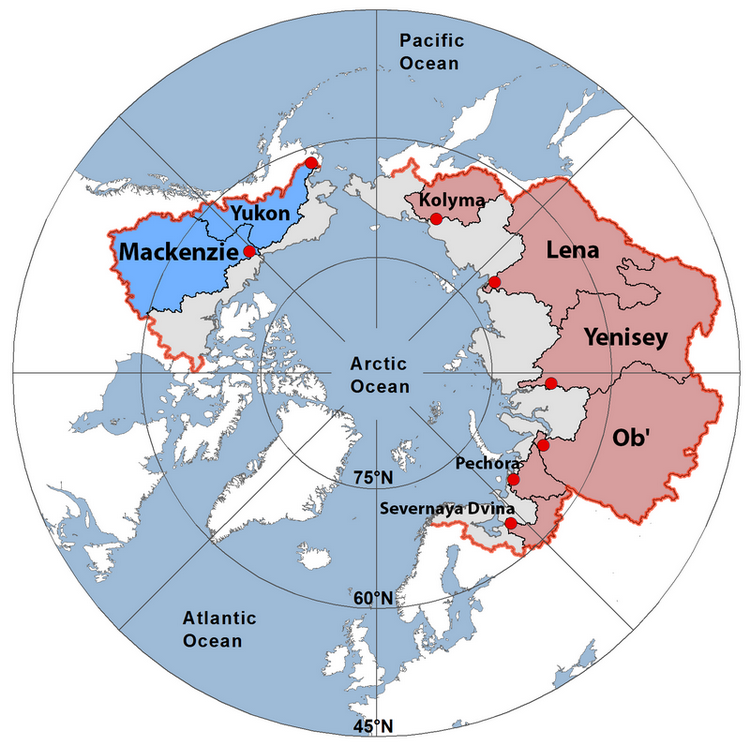
River discharge integrates hydrologic processes occurring throughout the surrounding landscape; consequently, changes in the discharge of large rivers can be a sensitive indicator of widespread changes in watersheds (Rawlins et al. 2010, Holmes et al. 2012).
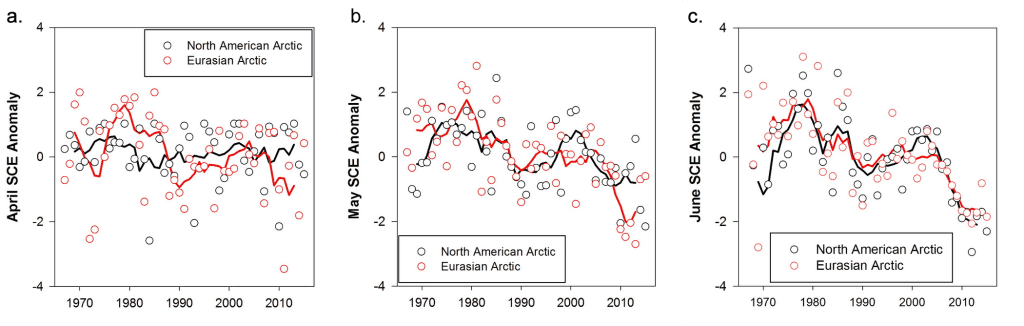
The Arctic (land areas north of 60°N) is always completely snow covered in winter, so it is the transition seasons of fall and spring that are significant when characterizing variability and change…
Terrestrial Snow Cover Read More »
The Arctic Report Card (www.arctic.noaa.gov/reportcard/) considers a range of environmental observations throughout the Arctic, and is updated annually. As in previous years, the 2015 update to the Arctic Report Card highlights the changes that continue to occur in both the physical and biological components of the Arctic environmental system.
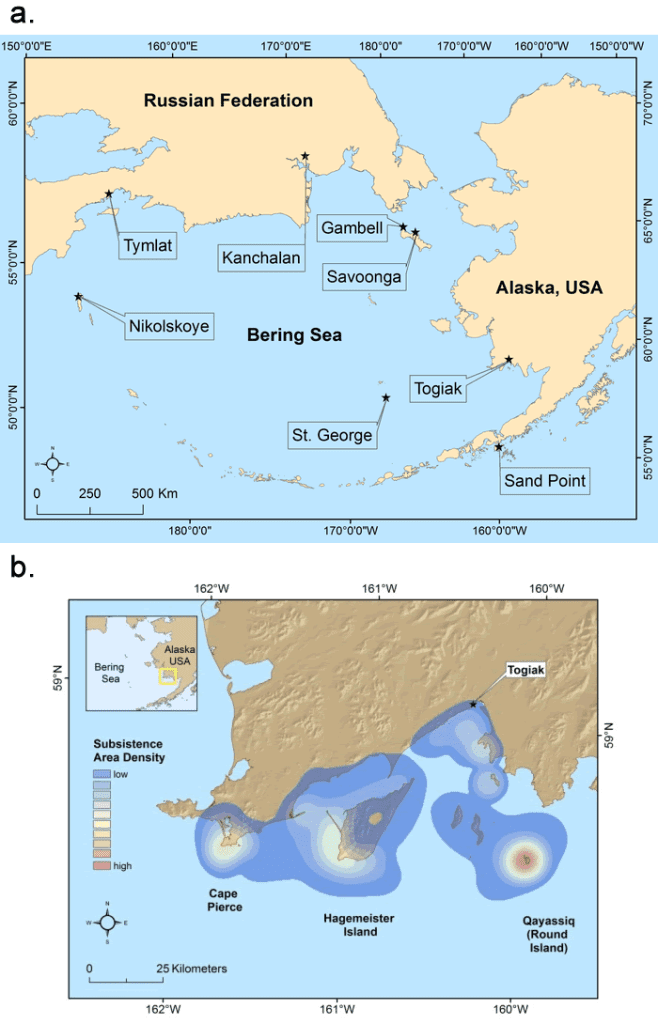
Community-based monitoring (CBM) is a broad set of approaches that engage the capacity of community residents in observing and monitoring of a region, e.g., the Arctic (Arctic Council 2015; Johnson et al. 2015). CBM encompasses a continuum of approaches from community-based observing network systems (CBONS), citizen science and observer blogs (Table 11.1).
Community-based Observing Network Systems for Arctic Change Detection and Response Read More »